Madison County Child Care Needs study highlights challenges for working families
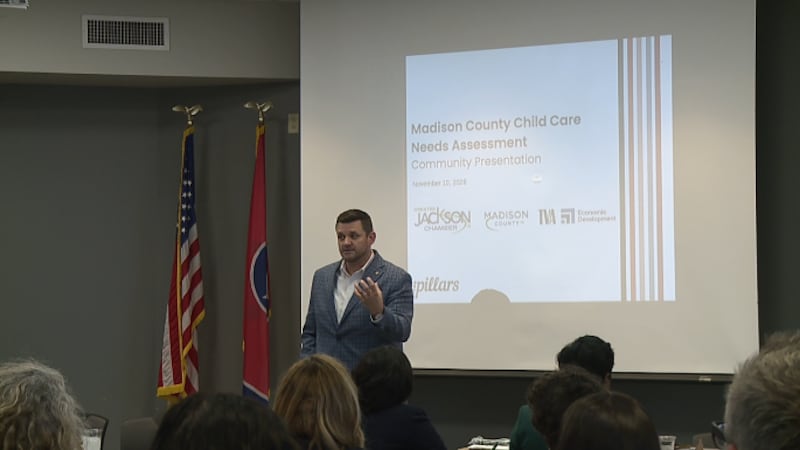
MADISON COUNTY, Tenn. (WBBJ) - The Greater Jackson Chamber presented the results of the Madison County Child Care Needs assessment Tuesday.
The presentation explained what was found, why child care matters for the economy and strategies for consideration. The meeting addressed the fact that child care shapes both Madison County’s workforce and economy.
Ashley LimBetti, founder and principal consultant said, “If you want an economy that is functioning, if you want a workforce that can go to work, childcare is what you need. The point of this study was to really quantify what we all feel as parents, that child care is hard, you have to make it work.”
The study did show that there were categories where working families’ child care needs go unmet. Parents said finding care is not the problem, the problem is cost, hours and quality.
72% of parents who want child care but don’t use it said cost is a challenge, while families in the county who are using childcare pay about twice what is considered affordable.
Wyde Edwards Jr. with West Tennessee Health Care says, “I didn’t realize child care is so expensive now. It’s tough. I see now, a better understanding of the choices that parents have to make with child care versus a job.”
Two strategies were proposed to help combat this issue and allow families to utilize child care with less stress. Employer contracted slots was the first strategy discussed. This means that employers would offer child care slots with local providers as an employee benefit and share the cost with employees.
The second strategy was workforce pathways. This would allow high schools, colleges, and providers to partner with students who would be allowed to train in local child care classrooms while earning credit towards a credential.
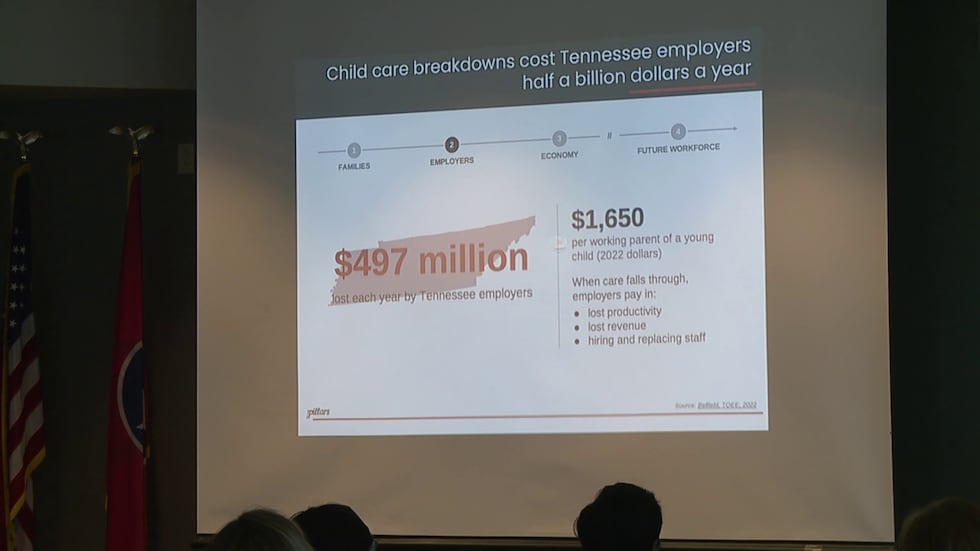
“There’s a huge opportunity. There’s a way to really as an employer invest in helping your people that has a double bottom line. It helps you, it helps them, and broadly it’s helping the economy,” continued LimBetti.
Currently only 23% of employers in Tennessee invest in child care for their employees.
Copyright 2026 WBBJ. All rights reserved.