Henderson Co. deputies’ head cameras record all traffic stops, calls
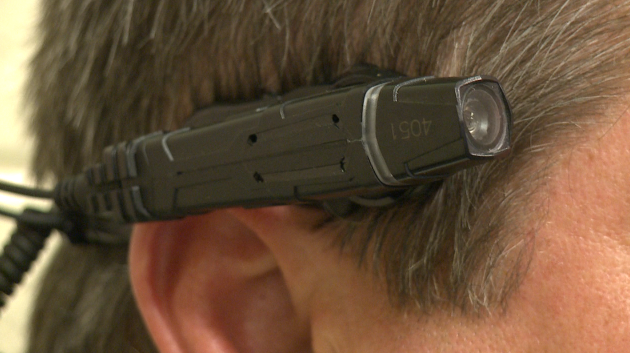
HENDERSON COUNTY, Tenn. — When Henderson County deputies suit up, they now have a new part of their uniform. “I believe it’s as necessary as having a car to show up on scene,” Sheriff Brian Duke said. Deputies now have tiny cameras on their heads that can record exactly what the officer sees on every stop and every call. Capt. Tracey Grisham said all video is saved. “Our policy is you record all contact at the end of your shift,” he said. “We’ll download them onto the computer.” Deputies simply double tap on a small battery in their pocket to start recording. The camera will even record back 30 seconds to catch what prompted the officer to hit the record button. Duke said the department has more than 30 body cameras. Every deputy, investigator and jail sergeant is required to wear one. He said it protects officers and the public by recording exactly what is said and done, but not everyone sees it that way. “In my opinion, if I have an emergency situation I don’t think other cops or anybody else should be allowed to see what’s going on with my situation,” said Henderson County resident Nigel Thomas. Duke said the recordings will only be used to investigate cases or incidents such as alleged officer misconduct. “Our profession is not what we know, it’s only what we can prove,” Duke said. “And the only way, or the best way, we get proof is by recording.” Duke said the officer-involved shooting of Michael Brown in Ferguson, Mo., prompted his decision to buy the cameras. Officer Darren Wilson claimed self-defense in the August shooting of the 18-year-old, but those who have protested argue Brown was murdered. “If a body camera was being used, there wouldn’t be this much debate,” Duke said. “It wouldn’t take this long to investigate.” Capt. Grisham said that is why he believes such small cameras can make a big difference. “I know with this camera system I have now, I will be able to prove what went on and what took place,” Grisham said. Duke said that proof will speak louder than any testimony. “An officer, prior to the body cameras, would have to take everything and put a report into words such that a jury or judge would have to recreate that whole environment,” Duke said. “That makes it completely different because now the judge and jury will see exactly what an officer saw.” Duke said 75 percent of the $20,000 bill for the cameras was covered by a state grant from the Governor’s Highway Safety Office. The rest came out of his budget.