State continues working to restore power following confirmation of 25 weather-related fatalities
HIGHLIGHTS
- The State Emergency Operations Center in Nashville remains activated at a Level 3 – State of Emergency to support statewide coordination in response to Winter Storm Fern
- TEMA has created a survey to self-report damages to homes as a result of Winter Storm Fern. Report your damages.
- The Tennessee Department of Health continues to report 25 weather-related fatalities as a result of Winter Storm Fern.
- Restoring power remains the state’s top priority, as prolonged cold temperatures continue to strain utility systems and slow restoration efforts across impacted regions
- Governor Bill Lee announced he requested an Expedited Major Disaster Declaration for 23 impacted counties.
- Price gouging is prohibited. If you have experienced a business that is price gouging, file a report to Tennessee’s Office of the Attorney General.
- Emergency Service Coordinators (ESCs) from TDOT, TDEC, TDCI, TDH, THP, TN Department of Human Services, and more are monitoring the situation and standing by to provide assistance to local jurisdictions.
CURRENT SITUATION
In response to Winter Storm Fern, state and local partners continue working together to support communities most impacted by prolonged power outages. Thanks to a generous donation from Elon Musk and xAI, the state received 500 generators, and they have now been fully distributed to the most impacted communities across Tennessee to help residents meet urgent needs. Distribution is being coordinated locally to ensure resources reach the people who need them most. In Davidson County, Nashville Office of Emergency Management is coordinating delivery to residents. In other impacted counties, local emergency management agencies are managing distribution through established recovery operations and community partners.
Generator safety is critical—especially carbon monoxide prevention. Residents should never run a generator inside a home, garage, or basement, or near windows, doors, or vents. Use battery-powered CO alarms when possible, and keep generators dry by operating them outdoors only.
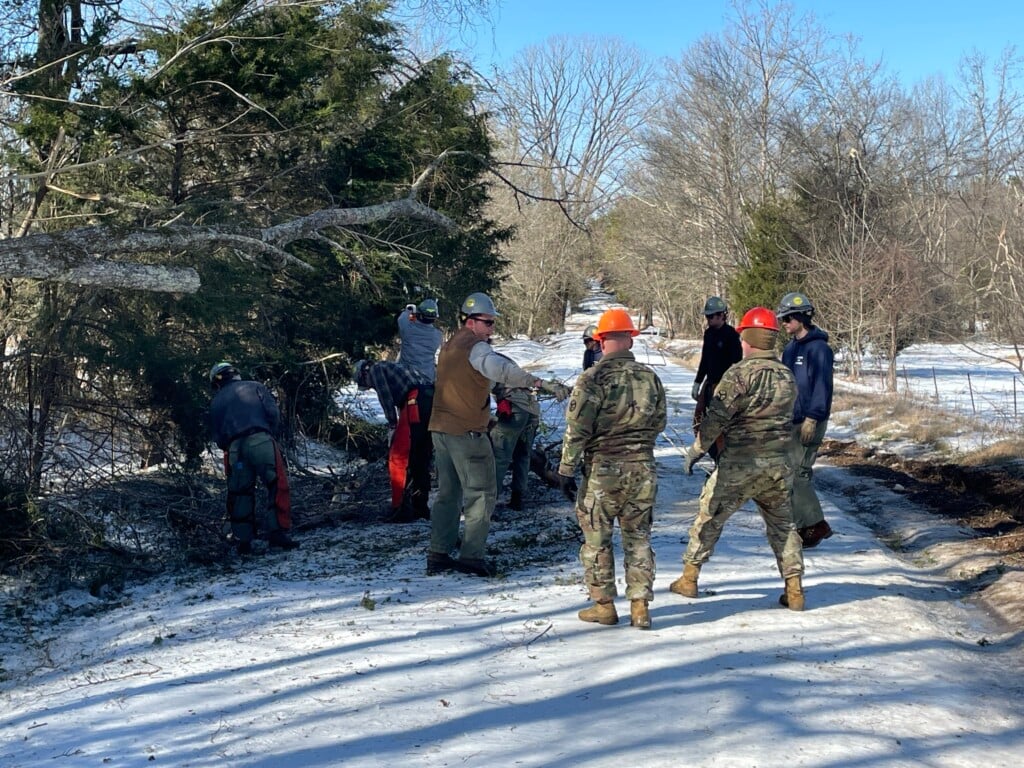
Through Tennessee’s Emergency Declaration issued Jan. 24, the state requested and deployed 226 U.S. Forestry personnel from 26 states to support ongoing recovery operations. These teams are positioned across impacted counties assisting with cut-and-toss operations, a key step that helps clear blocked access routes and allows utility crews to reach damaged areas faster and restore power more safely. We are grateful to the men and women who have traveled here to help Tennessee communities recover.
As cleanup continues after Winter Storm Fern, debris separation speeds pickup and reduces delays. Residents should keep debris separated by type as directed locally and place debris curbside away from mailboxes, utility poles, storm drains, and fire hydrants. These steps help crews work efficiently and safely.
Documentation is a key recovery step for residents impacted by the storm. Take photos and video of damage to homes, vehicles, and property, and save receipts for any cleanup or emergency expenses. Start with your insurance provider as an important first step. Documentation supports both TEMA’s Damage Assessment Survey and insurance claims and recovery processes.
Price gouging is prohibited after the Governor declares an abnormal economic disruption, and it can apply to essential items like emergency supplies, medical supplies, and consumer food items. The Attorney General’s Office reviews complaints individually, considering factors like supplier cost increases—high prices aren’t automatically gouging, but questionable spikes should be reported. File a complaint online through the Attorney General’s consumer complaint department and include the business name and location, date and time, item price before versus after, method of payment, and keep receipts; photos of posted prices can help.
POWER OUTAGES
- As of 10:00 a.m. on February 3, more than 19,500 customers are without power statewide.
- Lineworkers and other crews are working around the clock to restore power as quickly as possible.
- The public is reminded to stay clear of downed power lines and assume all lines are energized.
WARMING CENTERS
Warming centers are locally managed, and availability varies by location. TEMA maintains an interactive map of centers operating throughout the state. Please check the notes section on the map for each shelter, as hours of operation and other information may vary between locations. If you need assistance or have questions about shelters for your area, please contact your local Emergency Management Agency.
Tennessee Department of Transportation
This is a statewide, coordinated response, and every region is engaged. These figures help illustrate the scale of the effort:
- Labor hours: 149,000 Hours
- Salt: 106,000 Tons
- Brine: 1.8 Million Gallons
- Miles: 812,000
Before you get on the road, check road conditions on the TDOT Smartway website.
Tennessee National Guard
- Since the storm began, Tennessee National Guardsmen have cleared debris from more than 650 miles of road throughout the state, performed wellness checks, assisted at six warming centers, and have helped with transportation.
- Guardsmen are performing missions in nine counties that include Davidson, Decatur, Hardeman, Hardin, Macon, McNairy, Perry, Shelby, and Wayne counties. Many of these National Guard teams have partnered with their respective county Emergency Management Agencies and the U.S. and Tennessee Forestry Services to open roadways and restore power to Tennesseans.
- Soldiers with Chattanooga’s 35th Division Sustainment Brigade also continue to perform health and wellness checks and are assisting at a local warming center in Perry County.
Tennessee Highway Patrol
THP continues to respond to traffic crashes and provide assistance to stranded motorists. From January, 24, 2026 to February 3, 2026, troopers have assisted with:
- 3,214 motorists assisted
- 428 lane blockages
- 500 Abandoned vehicles checked
- 7,739 phone calls into dispatch
Tennessee Department of Agriculture Division of Forestry
The Tennessee Department of Agriculture Division of Forestry still has personnel deployed in the 10 storm-affected counties, where they continue to clear roads of trees and debris.
Tennessee Wildlife Resources Agency
TWRA wildlife managers, officers, technicians, and radio crews have continued to step up and collaborate with state partners to meet urgent needs.
Tennessee Bureau of Investigation
The TBI Hotline, 1-800-TBI-FIND (1-800-824-3463), will be operational Monday through Friday from 8:00 a.m. to 6:00 p.m. CT and is only intended to serve as a centralized, statewide resource for individuals seeking to report concerns that would normally prompt a wellness check. By directing these calls to the state level, local non-emergency public safety and emergency management agencies can focus on critical response and recovery efforts related to the storm.
Members of the public are encouraged to call 1-800-TBI-FIND instead of contacting local non-emergency public safety offices or local emergency management agencies for wellness check requests during this weather event.
To date, TBI has taken and closed 88 calls. The line remains open to help connect loved ones while power and cell phone connectivity is down in some areas.
ALERT: Several Tennessee residents are receiving communications (text messages, phone calls, and emails) purporting to be from TBI and 1-800-TBI-FIND. We suspect this may be a concerted effort to capitalize on the recent winter storm and scam residents. We will not call you from 1-800-TBI-FIND (1-800-824-3463) and will never ask for money. If you receive one of these calls, hang up and call us at 1-800-TBI-FIND, as your information may help us identify the source of these communications.
Davidson County Exception:
All wellness check requests for individuals located in Davidson County must be submitted through the county’s online hub page and should not be directed to the TBI Hotline. Requests can be made at on Metro Nashville’s webpage.
Tennessee Department of Health
Things to know about carbon monoxide poisoning:
- Many people rely on alternative power sources to keep their homes warm during power outages. Portable backup generators produce the odorless, colorless, poisonous gas carbon monoxide (CO). CO claims the lives of hundreds of people every year and makes thousands more ill.
- Never use a generator inside your home or garage even with the windows and doors are open.
- Only use generators outside, more than 20 feet away from your home, doors, and windows.
- Install battery-operated or battery backup carbon monoxide detectors near every sleeping area in your home.
- Check carbon monoxide detectors regularly to be sure they are functioning properly.
- For more information about CO poisoning prevention, visit Healthy Homes – Carbon Monoxide.
- Power outages can cause refrigerators and freezers to warm quickly, increasing the risk of foodborne illness. To keep food safe, keep cold foods at 41 degrees or below, keep doors shut, and when in doubt throw it out.
- The Tennessee Department of Health has confirmed 25 weather-related fatalities due to Winter Storm Fern:
o Six fatalities in Shelby
o Three fatalities in Davidson
o Three fatalities in Knox
o Two fatalities in Fayette
o Two fatalities in Hardin
o Two fatalities in Henderson
o Two fatalities Hickman
o Two fatalities in Obion
o One fatality in Cheatham
o One fatality in Dyer
o One fatality in Haywood
The Tennessee Department of Health has also confirmed one weather-related fatality due to the separate winter weather that began impacting East Tennessee on Friday, Jan. 30.
o One fatality in Greene
Tennessee Department of Environment and Conservation
State Parks
TDEC State Parks staff have continued to provide operational, logistical, and field support assisting with road clearing, search and rescue operations, and access restoration to support emergency medical services, law enforcement, and critical infrastructure repair.
Division of Water Resources
The Tennessee Department of Environment and Conservation is reporting systems with impacts. Residents should continue to monitor guidance from their local water system providers and remain alert for any protective actions that may be issued. The Tennessee Department of Environment and Conservation has created a real-time dashboard that lists all of the impacted water systems and any protective actions the water provider has issued.
Tennessee Department of Human Services
If you are a current recipient of Supplemental Nutrition Assistance Program (SNAP) benefits, the Tennessee Department of Human Services is prepared to provided replacement SNAP benefits to current SNAP households who have suffered losses due to power outages of 12 hours or more. For more information, including necessary forms, please visit the Tennessee Department of Human Services website.
PROTECTIVE ACTIONS/KEY MESSAGES
- Contact your local emergency management agency if you need immediate assistance.
- Use extreme caution when heating homes during power outages. Never use generators, grills, or propane heaters indoors. Use space heaters safely and never leave them unattended.
- Discard perishable food that has been above 40°F for more than two hours due to power outages.
- Crisis Cleanup is assisting residents with free storm-related property cleanup, including fallen trees. To request assistance, call 844-965-1386.
- Residents who rely on medical devices or refrigerated medications should plan ahead and contact healthcare providers or utilities if power disruptions pose a health risk.
- Turn thermostats down to 68 degrees or lower to reduce energy consumption.
- Do not connect generators directly to your home.
- Avoid unnecessary travel and limit time outdoors due to hazardous conditions.
- Stay clear of downed power lines and assume all lines are energized.
- Check on neighbors who may be vulnerable, including seniors and those without power or heat.
- Rely on official sources such as TEMA, local EMAs, TDOT, and utility providers for accurate information.
- Report price gouging to the Attorney General’s Division of Consumer Affairs.
- Call *STAR THP (847) for assistance or emergencies on Tennessee highways.
- Monitor local news for the latest weather updates.