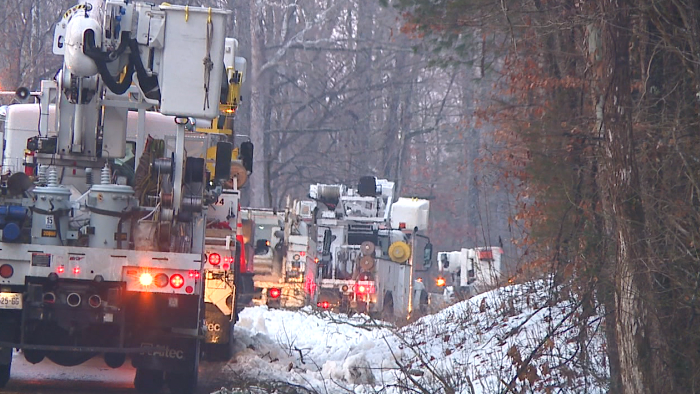
Tennessee named 5th most stressful for drivers
PRESS RELEASE:
Tennessee Named 5th Most Stressful For Drivers
The Most Stressful U.S. States To Drive To, Revealed In New Study
Georgia, Florida, and California top the list – natural disasters, heavy traffic, and fatal crashes create the most demanding driving conditions
Key Findings:
- New study reveals the most stressful U.S. states to drive to, based on crash frequency, traffic congestion, and natural disaster exposure
- Georgia ranks as the most stressful state for drivers, followed by Florida and California
- Auto expert at warns that understanding these regional stress factors can help drivers prepare better and reduce anxiety on the road
Every driver knows the feeling: white-knuckle grip on the steering wheel, eyes darting between aggressive lane-changers, and weather alerts pinging on your phone. As roads grow more crowded, extreme weather becomes more frequent, and fatal crashes claim thousands of lives annually, the demands on drivers keep mounting.
With this in mind, A1 Auto Transport conducted a study to determine which U.S. states place the greatest stress on drivers. “When you’re transporting vehicles across the country, you see firsthand how different states present unique challenges,” says Joe Webster, Marketing Director at A1 Auto Transport. “We wanted to quantify what drivers instinctively feel, that some states are just harder to navigate than others.”
The Study
The study analyzed three key factors: traffic intensity (annual vehicle-miles traveled per lane-mile), long-term natural disaster frequency (1980-2025 averages), and road safety (2023 fatal crashes).
Data came from the Federal Highway Administration, World Population Review (FEMA/NOAA data), and NHTSA’s Fatality Analysis Reporting System. Each factor was normalized and weighted, traffic at 40%, crashes at 35%, disasters at 25%, creating a Driving Stress Index from 0 to 100.
Table 1: Driving Stress Index by Top 10 States
| Rank | State | 2023 Annual VMT Per Lane-mile | Avg. Natural Disasters Per Year (1980 – 2025) | 2023 Number of Fatal Crashes | Stress Index |
| 1 | Georgia | 1,565.38 | 2.90 | 1,491.00 | 88.31 |
| 2 | Florida | 2,896.79 | 2.00 | 3,183.00 | 86.39 |
| 3 | California | 3,532.77 | 1.00 | 3,727.00 | 82.60 |
| 4 | Texas | 1,102.75 | 4.10 | 3,874.00 | 81.20 |
| 5 | Tennessee | 1,519.58 | 2.50 | 1,219.00 | 81.16 |
| 6 | Illinois | 1,320.36 | 2.80 | 1,143.00 | 77.72 |
| 7 | Ohio | 1,410.21 | 2.30 | 1,150.00 | 74.99 |
| 8 | New York | 1,531.40 | 2.10 | 1,033.00 | 74.35 |
| 9 | New Jersey | 3,593.05 | 1.60 | 573.00 | 71.10 |
| 10 | Michigan | 1,884.29 | 1.30 | 1,020.00 | 70.97 |
America’s Most Stressful Driving Destinations
Georgia claims the top spot with a stress index of 88.31, driven by a dangerous combination of factors. The state recorded 1,491 fatal crashes in 2023 and faces an average of 2.90 natural disasters annually, nearly three times the risk of states like California. Traffic intensity sits at 1,565 vehicle-miles per lane-mile, meaning Georgia’s roads handle substantial congestion without the infrastructure density of larger states.
Florida follows closely at 86.39, but its stress profile differs significantly. With 2,896 VMT per lane-mile, nearly double Georgia’s traffic density, Florida’s roads are packed. The state also leads the top 10 in fatal crashes with 3,183 deaths in 2023 alone. “Florida sees a perfect storm of tourists unfamiliar with local roads, retirees with varying driving abilities, and year-round heavy traffic,” Webster explains. “Add in hurricane season and tropical storms, and you have consistently high-pressure driving conditions.”
California ranks third at 82.60, posting the highest traffic congestion in the top 10 at 3,532 VMT per lane-mile. The state recorded 3,727 fatal crashes in 2023, the second-highest nationally. Despite relatively low natural disaster frequency at 1.00 per year in this dataset, California’s sheer volume of vehicles and challenging terrain keeps stress levels high.
Texas, surprisingly, lands at fourth with 81.20 despite having the lowest traffic intensity in the top 10 at just 1,102 VMT per lane-mile. What drives Texas’s ranking skyward is its natural disaster exposure, the highest in the nation at 4.10 annual events, and the second-highest fatal crash total at 3,874. The state’s vast geography means drivers face everything from Gulf Coast hurricanes to Panhandle tornadoes to flash flooding across sprawling metro areas like Houston and Dallas-Fort Worth.
Tennessee rounds out the top five at 81.16, with 1,219 fatal crashes and 2.50 natural disasters annually. Its traffic intensity of 1,519 VMT per lane-mile places significant demand on road infrastructure, particularly around Nashville and Memphis corridors, where population growth has outpaced highway expansion.
There are geographic clusters apparent in the rankings. The Southeast dominates, where humid subtropical climates bring severe thunderstorms, hurricanes, and tornado activity. Midwest representation through Illinois (77.72), Ohio (74.99), and Michigan (70.97) reflects heavy winter weather, aging infrastructure, and high-volume interstate corridors connecting major industrial centers.
One genuine surprise appears at number nine: New Jersey scores 71.10 despite recording just 573 fatal crashes, the lowest in the top 10. Its inclusion stems from having the nation’s most congested roads at 3,593 VMT per lane-mile, meaning New Jersey drivers navigate nearly 3,600 vehicle-miles traveled for every mile of available lane.
“New Jersey’s small geographic footprint combined with dense population creates a pressure cooker,” Webster notes. “Drivers there face relentless traffic with minimal relief.”
What Actually Makes Driving Stressful
The data reveals that no single factor dominates. Traffic congestion, weighted at 40% of the index, matters most in states with limited space and high population density. New Jersey, California, and Florida all exceed 2,800 VMT per lane-mile, creating daily gridlock that tests even experienced drivers. This metric reflects the psychological toll of constant lane changes, brake lights, and extended commute times that turn routine trips into endurance tests.
Fatal crash risk, weighted at 35%, varies dramatically by region but tells a consistent story about road danger. Southern states lead in absolute crash numbers, reflecting both population size and driving culture. States with sprawling metro areas and long commutes see higher exposure simply because residents spend more hours behind the wheel. Georgia’s 1,491 fatal crashes in 2023 translate to roughly four deaths every day on state roads, a constant reminder of the stakes involved in daily driving.
Natural disaster exposure, weighted at 25%, shows the clearest regional pattern and perhaps the most unpredictable stress factor. Texas’s 4.10 annual disasters far exceed other top states, with Gulf Coast hurricanes, severe thunderstorms, and flash flooding creating year-round hazards that can turn familiar routes treacherous without warning. Georgia (2.90), Illinois (2.80), and Tennessee (2.50) all face multiple severe weather events annually, from tornado outbreaks to ice storms that can shut down entire regions and strand motorists.
This explains why some high-population states rank lower than expected. New York, despite heavy traffic around New York City, benefits from lower natural disaster frequency (2.10) and extensive public transportation that reduces road dependency.
“Being aware of these patterns helps drivers prepare,” Webster says. “If you’re heading to Georgia or Florida, expect aggressive traffic and sudden weather changes.”
Joe Webster, Marketing Director at A1 Auto Transport, commented:
“After decades of moving vehicles across every state, we’ve seen how driving conditions affect not only delivery times, but driver wellbeing too. The states ranking highest are statistically challenging and places where drivers report the most fatigue and anxiety.
“What this data shows is that modern driving stress is about both traffic and navigating unpredictable conditions where congestion, safety risks, and severe weather hit at once.
“Looking ahead, these pressures will likely intensify as climate patterns make severe weather more frequent and road infrastructure struggles to keep pace with population growth. For drivers today, the best strategy is preparation, know the conditions you’re heading into, plan for weather delays, and recognize when fatigue is setting in.”
Credit
https://www.a1autotransport.com/
About A1 Auto Transport
A1 Auto Transport is a U.S.-based vehicle shipping and logistics provider with more than three decades of experience moving cars, motorcycles, RVs, boats, heavy equipment, and specialty vehicles across the United States and around the world. They offer a full suite of transport services, including door-to-door delivery, terminal-to-terminal options, enclosed and open-carrier shipping, and tailored solutions for exotic, classic, and high-value vehicles. With operations spanning all 50 states and service to over 190 countries, A1 Auto Transport combines a vetted network of licensed carriers with comprehensive cargo insurance and real-time tracking to ensure safe, efficient delivery for every shipment. Built on decades of industry expertise and a commitment to transparency and customer care, the company prioritizes clear pricing, straightforward communication, and customized logistics planning to simplify the often complex process of vehicle transport.
Methodology
This study ranked U.S. states by driving stress using three key metrics to create a composite Driving Stress Index.
2023 Annual VMT Per Lane-mile measures traffic congestion intensity by calculating total annual vehicle-miles traveled divided by available lane-miles, using 2023 data from the Federal Highway Administration PS-1 Table. Higher values indicate heavier road usage and greater daily driving pressure.
Average Natural Disasters Per Year (1980–2025) represents long-term environmental driving risk, calculated as the average annual number of natural disasters per state between 1980 and 2025, sourced from World Population Review(based on FEMA and NOAA data). Higher values indicate greater exposure to weather-related driving hazards such as storms, floods, wildfires, and hurricanes.
2023 Number of Fatal Crashes captures road safety risk using the total number of fatal vehicle crashes in 2023, sourced from the NHTSA Fatality Analysis Reporting System (FARS). Higher values indicate increased danger and psychological stress for drivers due to accident risk.
The Stress Index is a composite score combining all three normalized factors to assess overall driving stress by state. Each factor was normalized and weighted as follows: Annual VMT per lane-mile (40%), Fatal crashes (35%), and Natural disasters (25%). Scores were scaled to a 0–100 range, where a higher Stress Index indicates more stressful driving conditions driven by congestion, safety risks, and environmental hazards.
For local news, click here.