A 31-year-old woman froze to death. A lawsuit claims a 911 dispatcher failed to get her urgent help.
ANCHORAGE, Alaska (KTUU) – On Feb. 5, 2026, the family of Alecia Ai Lindsay filed a wrongful death lawsuit against the Municipality of Anchorage, alleging that a 911 dispatcher’s failure to recognize a medical emergency — and a delay of more than an hour in sending help — directly caused her death.
The case turns on a narrow but consequential legal question: Does Alaska law shield emergency dispatchers from negligence liability, even when their decisions may have cost a life?
Feb. 8, 2024
It was seasonably cold in Anchorage on Feb. 8, 2024 — temperatures that day ranged from 17–28 degrees Fahrenheit, with 35 inches of snow on the ground.
By 6:34 a.m., Alecia Lindsay was already outside in it. Anchorage police call logs show Lindsay was knocking on the door at a home on East 10th Avenue, sitting on the ground by a garage. She wasn’t speaking. She looked disoriented. A resident at the home called 911.
The dispatcher assured the caller officers would arrive and told them to call back if anything changed.
Call logs show no units were dispatched for more than an hour after the first 911 call.
The Final 24 Hours
To understand what happened on that below-freezing February 2024 morning, documents reviewed by Alaska’s News Source show in the hours before she died, Lindsay was dealing with a set of circumstances that court and police records show had been building for at least two years.
She arrived at Ted Stevens Anchorage International Airport around 5:35 a.m. on Feb. 7, 2024. According to police reports, Airport police body-camera video shows she told officers she had lost her phone and someone was supposed to book her a flight but hadn’t. When asked what she was doing, she was vague, saying she’d “been up all night” and was exhausted.
The responding officer noted as she cried, her hands were red from the cold. When he asked where she lived, the body-camera recording shows she paused before answering she “had a rough day” and “a string of bad things happened.”
The officer noted police were concerned she might be experiencing a mental health crisis. Records show no detention, mental health assessment or crisis referral was made before airport police drove her home at 6:42 a.m.
By 2:30 p.m., Anchorage police say Lindsay had packed a suitcase and appeared unannounced at the door of a neighbor in her building.
The neighbor told police investigators she saw a woman who appeared to be forcing herself not to talk — wearing all black, suitcase in hand and with her coat. According to the detective’s narrative of the recorded interview, the neighbor said Lindsay held up her hands, gestured toward the door, and made silent motions that eventually communicated what she wanted: a ride to the airport.
When the neighbor tried to engage Lindsay — asking if she was okay, in trouble or hurt — Lindsay only made a humming sound. She kept rubbing her neck throughout the drive and looked tearful, with a glazed expression. The neighbor also noted Lindsay didn’t have her phone on her.
At drop-off, according to the police account of the neighbor’s statement, Lindsay had a moment of realization — she turned, said goodbye and thanked the neighbor for the ride.
The week prior, the neighbor told police, Lindsay had seemed like a normal neighbor — but “this was completely different.”
The neighbor told investigators she did not believe Lindsay had her phone with her — and Lindsay did not respond to the neighbor’s texts after drop-off — something the neighbor said was unusual.
Lindsay never boarded a flight. Around 4:15 p.m., police say she flagged down a driver near the airport parking area.
The driver later told police Lindsay was wearing a skirt in February weather, was visibly freezing and was mostly nonverbal — when he asked her questions, she would hold up a finger and fan her face. He told investigators he worried she might be in a mental health crisis or physically unwell.
After dropping her in downtown Anchorage near 10th Ave. and D Street, the driver told officers she walked into the middle of the street and stood there, fanning her face. He was so concerned he called 911 to report his worry for her safety, then drove away.
Police reports show that officers responded to that 911 call but later cleared the call as “they did not find anything.”
Lindsay never went back to her apartment that night. Security camera footage gathered by police shows her wandering the pre-dawn streets of Anchorage — still in the same black clothing she had been wearing since the day before, but no longer with her coat. In one video from 3:34 a.m., police say she attempted to climb a fence before putting her leg back down and walking off.
The Call Log: A Disturbance, Not a Medical Call
By 6:34 a.m. on Feb. 8, after hours of roaming in below-freezing temperatures, police say Lindsay knocked on the resident’s door on East 10th Avenue.
According to Anchorage Police call logs, the caller reported a woman knocking, sitting on the ground by the garage, appearing disoriented. The dispatcher classified the call as Priority 3 — a disturbance, not a medical emergency.
The logs show the dispatcher assured the caller help was on the way and told them to call back if things changed.
According to the call log, the dispatch channel entered a hold status — a technical designation recorded as “CHN HOLD” — 51 seconds after the call was logged, and again at 6:57 a.m., with no recorded dispatcher activity in the 22 minutes between.
Nearly 30 minutes later, at 7:04 a.m., the resident called back. According to the call log, the caller reported the woman was “feeling overwhelmed” and crawling around.
According to the family’s wrongful death lawsuit, during the second 911 call the dispatcher focused on the callers’ safety—asking whether they knew her, whether she had any weapons out, whether they could stay separated from her until someone arrived, and whether they could lock their door. The suit also alleges the dispatcher said help would come “as soon as we can” and instructed them to call back if the situation escalated.
During this second call, the caller’s spouse made observations the plaintiffs cite as central to their lawsuit. According to the police investigation, the spouse told the dispatcher the woman couldn’t really talk, needed time to comprehend, felt overwhelmed and was trying to open the door — and was “shaking extremely because it was cold.”
Those words — shaking extremely because it was cold — are cited by the plaintiffs as the clearest signal the dispatcher missed. The complaint argues that to a trained dispatcher in Alaska, those words should have indicated one thing: hypothermia.
More than half an hour after the initial call, the dispatcher made a note in the system: the woman was outside on the patio, wearing a black sweater, black jeans and black boots — no coat, hat or gloves — in temperatures between 17–28 degrees Fahrenheit.
Then nothing.
For the next 30 minutes, there is no recorded dispatcher activity.
At 7:36 a.m., more than one hour after the first call, dispatch was issued for police — not for emergency medical services. The call remained classified as Priority 3.
An Anchorage police officer arrived at 7:46 a.m. The officer reported finding a woman lying on ice, not dressed for the weather, in and out of consciousness and flailing her arms. At 7:54 a.m. — about eight minutes after arriving, and roughly 80 minutes after the first call — the officer requested an ambulance with Code Red priority. It was the first time EMS had been requested.
The call was reclassified as Priority 1 — a life-threatening emergency. The call log records that paramedics did not arrive with emergency lights and sirens. The plaintiffs’ complaint alleges EMS did not respond “red”; in its answer, the city denies that characterization.
At 8:05 a.m. — more than an hour and a half after the first 911 call — EMS arrived at the scene.
At 8:10 a.m., paramedics lifted Lindsay from the ground. At 8:12 a.m., according to a transcript of officer body-camera audio, she stopped breathing.
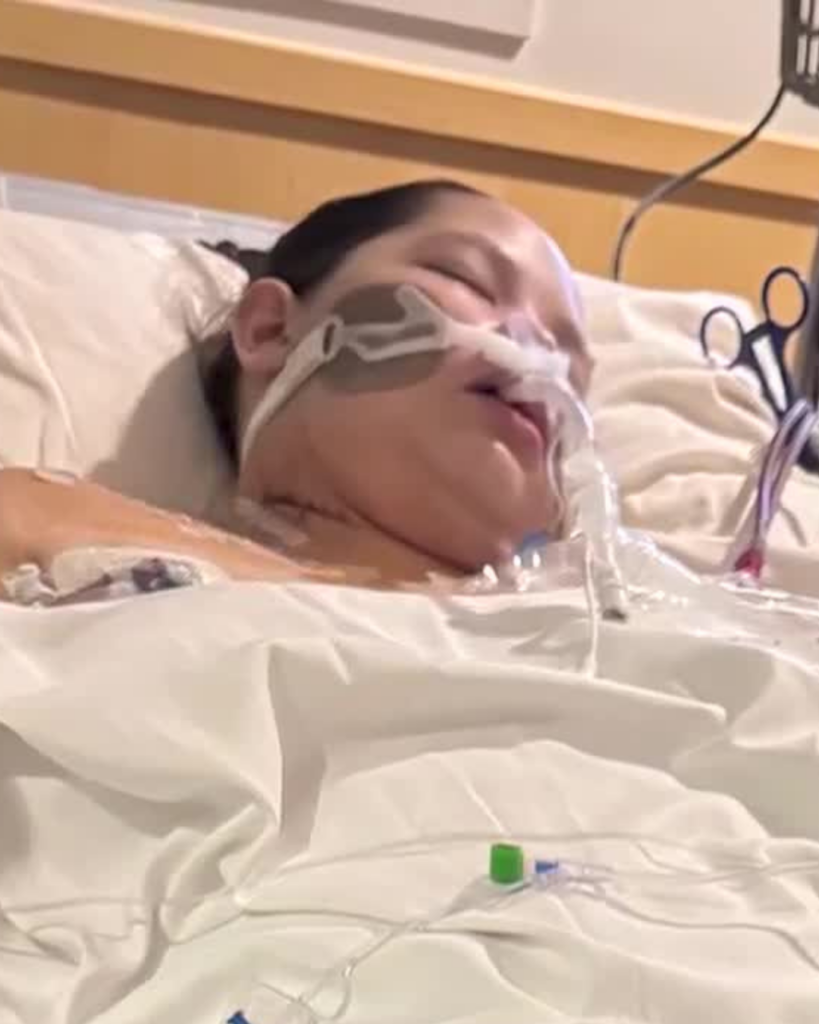
By 9:38 a.m., Alecia Ai Lindsay was pronounced dead at Providence Hospital. The medical examiner’s determination was straightforward: hypothermia due to exposure to cold environmental temperatures.
Nearly two years later, her family filed their wrongful death lawsuit against the city — but whether that case survives hinges on legal language in an Alaska statute that could bar the plaintiffs’ claims entirely.
The investigation remains open and assigned to APD’s Homicide Unit — the department is not treating this as a closed case.
The Months Before
Police records reviewed by Alaska’s News Source show Lindsay was dealing with mounting financial, legal and personal pressures in the months before her death. Among them: a two-year legal dispute with her parents over her grandmother’s estate.
Court records show Randy and Susan Kaer had an extensive history of litigation before the dispute with their daughter. They had been defendants in 25 lawsuits dating back to 2003, involving debt collection, eviction, real estate disputes and homeowners’ association complaints — most resolved through settlement or default judgments against them.
They also accumulated significant secured debt: a legal claim filed against their Big Lake, Alaska property in 2020; a $431,386 home equity line of credit on their Anchorage home in 2022; and a $1.345 million refinanced deed of trust on their Big Lake condo, also in 2022. The Kaers also owned a hotel in Juneau.
When Alecia’s grandmother, Ai Liau Mayo, died on June 7, 2022, her will named Lindsay as personal representative of the estate.
Within weeks, her parents filed a civil complaint alleging Lindsay had stolen hundreds of thousands of dollars’ worth of jewelry from her grandmother’s safes.
A court order dated Feb. 7, 2023 removed Lindsay as personal representative of the estate.
In March 2023, the Kaers filed a financing statement using their Juneau hotel as collateral. By January 2024, they had filed additional financing statements using both the Big Lake condo and the Juneau hotel.
Rather than continue litigating, the parties reached a settlement. Under the agreement, signed by all parties and approved by Superior Court Judge Andrew Guidi on Nov. 27, 2023, Lindsay received $256,000 from the estate in exchange for forfeiting all other claims — and returned the jewelry to her parents.
The theft allegations were never proven or disproven in court. The settlement agreement explicitly states it is not an admission of wrongdoing by any party, and no restitution flowed to her parents.
The building manager at Lindsay’s complex told investigators she had received about $250,000 in cash in the period before her death — consistent with the settlement funds.
Despite the settlement, police found Lindsay was two months behind on her $2,500 monthly rent by the time of her death. She had borrowed money from tenants and, according to the building manager, some stopped responding when she could not pay them back.
Her ex-husband told police because of the lawsuit, Lindsay had lost contact with her family.
When officers searched her apartment after her death, they reported her thermostat set to 61 degrees, clothing still in the washing machine and notebooks filling the apartment — the handwriting so illegible investigators said they could not decipher it.
The Kaers filed their wrongful death lawsuit on Feb. 5, 2026, more than three years after the estate litigation began.
The Legal Question
The family’s lawsuit could face a significant legal hurdle. Alaska Statute shields government agencies from negligence claims when the action in question involved a judgment call — what the law calls a “discretionary function.” The statute states immunity applies to claims “arising out of the performance of any discretionary function, whether or not the discretion be abused.”
The city invoked that statute in its March 10, 2026 answer as a potential bar to the entire lawsuit.
The plaintiffs argue the dispatcher’s actions were not a judgment call, but a failure to follow established protocol — that asking basic medical triage questions and reclassifying the call when a caller reported a person shaking from the cold are standard operational steps, not discretionary decisions.
According to the family’s complaint, Alaska appellate courts have not definitively resolved where that line falls.
What Comes Next
On March 10, 2026, the city filed its formal answer. On the core facts, the Municipality admitted the times of both 911 calls, the officer’s arrival, EMS’s arrival and that Alecia Lindsay died at Providence Hospital with hypothermia listed as the cause of death.
On the question of what the dispatcher heard and how those facts should have been interpreted, the city’s answer offered no explanation — stating eight times “the 911 call transcript speaks for itself.”
The city denied all three causes of action — negligence by the dispatcher, negligence by APD and negligent infliction of emotional distress — and denied that the plaintiffs are entitled to any damages.
Beyond the immunity argument, the city argued the dispatcher owed no legal duty to Lindsay enforceable in court; that any harm was caused by others, not the city; and APD and the Emergency Communications Center are not independent legal entities that can be sued separately — only the Municipality itself.
The outcome could reshape how emergency dispatchers in Alaska respond to winter medical emergencies. Or it could reaffirm the broad scope of government immunity under Alaska law — leaving questions of dispatcher negligence to be decided within that statutory framework.
Alaska’s News Source reached out multiple times to the Kaer family for comment, but they did not respond. The family’s attorney also declined to comment on the record.
Anchorage police and the Municipality of Anchorage both declined to comment on the case.
Alaska’s News Source made a public records request for 911 audio recordings from the day Alecia Lindsay died, but the city denied the request, citing the ongoing litigation.
Copyright 2026 KTUU via Gray Local Media, Inc. All rights reserved.
For more U.S. news, click here.