Hearing in Luigi Mangione’s state murder case sheds new light on his arrest
NEW YORK (AP) — Minutes after police approached Luigi Mangione in a Pennsylvania McDonald’s, he told an officer he didn’t want to talk. That’s according to video and testimony at a court hearing Thursday for the man charged in the killing UnitedHealthcare CEO Brian Thompson. The proceedings started Monday and could extend to next week. Thursday marks the anniversary of last year’s killing, which happened on a Manhattan sidewalk. Mangione has pleaded not guilty to state and federal murder charges. Before any trials get scheduled, his lawyers are trying to preclude the eventual jurors from hearing about his alleged statements to law officers and items, including a gun and a notebook, that police allegedly seized from his backpack.

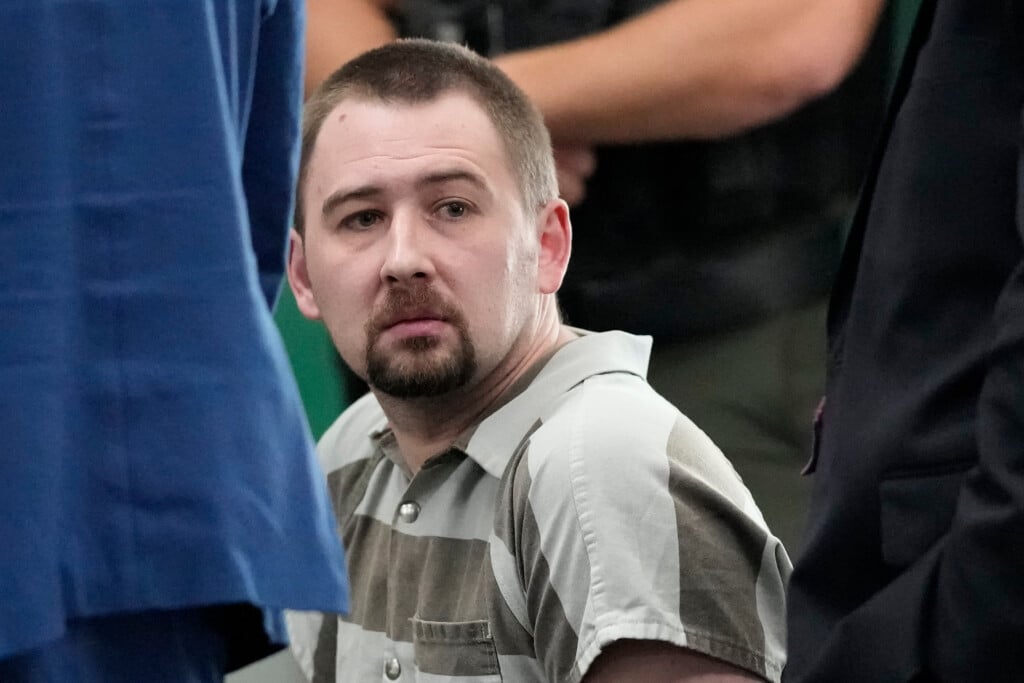
Luigi Mangione appears in Manhattan Criminal Court for an evidence hearing, Thursday, Dec. 4, 2025, in New York. (Curtis Means /Pool Photo via AP)
Full Story
NEW YORK (AP) — Minutes after police approached Luigi Mangione in a Pennsylvania McDonald’s, he told an officer he didn’t want to talk, according to video and testimony at a court hearing Thursday for the man charged with killing UnitedHealthcare CEO Brian Thompson.
Although some video and accounts of police interactions with Mangione emerged earlier in this week’s hearing, Thursday’s proceedings shed new light on the lead-up to and aftermath of his Dec. 9, 2024, arrest in Altoona, Pennsylvania.

Luigi Mangione appears in court alongside his attorneys Karen Friedman Agnifilo, left, and Marc Agnifilo for an evidence hearing, Thursday, Dec. 4, 2025, in New York. (Angela Weiss/Pool Photo via AP)
Mangione’s lawyers are trying to preclude key evidence from being presented at his state murder trial, including his initial statements to police and a gun and diary they say they found in his backpack.
On the hearing’s fourth day, the 27-year-old Mangione appeared to follow the proceedings intently, at times leaning over the defense table to scrutinize papers or take notes. He briefly looked down as Altoona Police Officer Tyler Frye was asked about a strip-search of Mangione after his arrest. Under the department’s policy, that search wasn’t recorded.
It happened after police were told that someone at the McDonald’s resembled the much-publicized suspect in Thompson’s killing. But Frye and Officer Joseph Detwiler initially approached Mangione with a low-key tone, saying only that someone had said he looked “suspicious.” Asked for his ID, he gave a phony New Jersey driver’s license with a fake name, according to prosecutors.
‘I don’t know what you guys are up to’
Moments later, after frisking Mangione, Detwiler stepped away to communicate with dispatchers about the license, leaving the rookie Frye by Mangione’s table to talk to him. Frye asked him, “What’s going on?” and what had brought him to Altoona.
“I don’t know what you guys are up to,” Mangione answered, and he inquired what was afoot.
After repeating the claim that someone was suspicious of Mangione, Frye asked: “You don’t want to talk to me or anything?”
Mangione indicated that he didn’t. Still, during the roughly 20 minutes before Mangione was told he had the right to remain silent, he answered other questions asked by the officers, and also posed a few of his own.
“Can I ask why there’s so many cops here?” he asked shortly before being informed he was being arrested on a forgery charge related to his false ID. By that point, roughly a dozen officers had converged on the restaurant, and Mangione had been told he was being investigated and had been handcuffed.
What’s at stake?
Mangione has pleaded not guilty to state and federal murder charges. Before any trials get scheduled, his lawyers are trying to prevent the eventual jurors from hearing about his alleged statements to law officers and items — including a gun and a notebook — they allegedly seized from his backpack.
The evidence is key to prosecutors’ case. They have said the 9 mm handgun matches the firearm used in the killing, that writings in the notebook laid out Mangione’s disdain for health insurers and ideas about killing a CEO at an investor conference, and that he gave police the same fake name that the alleged gunman used at a New York hostel days before the shooting.
Hearing coincides with anniversary
Thursday’s proceedings came on the anniversary of the killing, which UnitedHealthcare marked by lowering the flags at its campuses in Minnetonka and Eden Prairie, Minnesota, and encouraging employees to engage in volunteering.
Thompson, 50, was shot from behind as he walked to an investor conference. He became UnitedHealthcare’s CEO in 2021 and had worked within parent UnitedHealth Group Inc. for 20 years.
The hearing, which started Monday and could extend to next week, applies only to the state case. But it is giving the public an extensive preview of some testimony, video, 911 audio and other records relevant to both cases.
After encountering Mangione, Detwiler and Frye tried to play it cool by intimating that they were simply responding to a loitering complaint and chatting about his steak sandwich. Still, they patted Mangione down, pushed his backpack away from him and summoned more officers. About 15 minutes in, an officer warned him that he was being investigated and would be arrested if he repeated what they had determined was a fake name.
After Mangione gave his real one, he was read his rights, handcuffed, frisked again and ultimately arrested on a forgery charge related to his fake ID.
Mangione’s lawyers argue that his statements shouldn’t be allowed as trial evidence because officers started questioning him before reading his rights. They say the contents of his backpack should be excluded because police didn’t get a warrant before searching it.
Manhattan prosecutors haven’t yet detailed their arguments for allowing the disputed evidence. Federal prosecutors have maintained that the backpack search was justified to ensure there was nothing dangerous inside, and that Mangione’s statements to officers were voluntary and made before he was under arrest.
Many criminal cases see disputes over evidence and the complicated legal standards governing police searches and interactions with potential suspects.
For more U.S. news, click here.