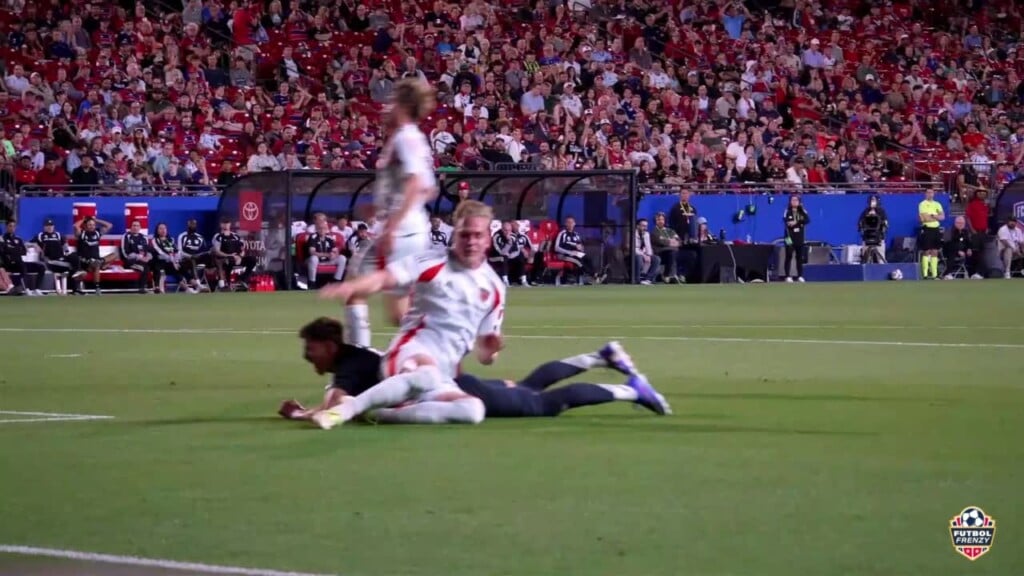
Futbol Frenzy: Soccer fan helps break down confusing rules for American viewers
For a lot of Americans, soccer can feel like a different language.
Rachel Schwab loves the game. She was at the Londoner pub in Addison rooting on her favorite soccer club, Arsenal. But even she sometimes struggles to explain the rules.
She’s not alone.
Offsides
The offsides rule is one everyone struggles with.
If a player is on the opponent’s half of the field and is closer to their goal than both the ball and the second to last defender, that means the player is offside.
In other words, players can’t cherry-pick. They have to time their run right when the ball is passed.
Stoppage time
The clock hits 90 minutes, but the game keeps going. Referees keep track of the time.
“It’s very controversial,” Schwab said. “I don’t keep track of it.”
The clock never stops during a soccer match. Referees track delays and add time back at the end, meaning there’s still time for big things to happen.
Corner kicks
If the ball goes out of bounds on the end line from the opposing team, the offense gets a corner kick.
If the defense touches the ball last and it goes out over the end line, the offense gets to take a corner kick on that end of the field.
In one example, a player driving the ball down the field was on the offense. The defense tried to kick the ball back, but kicked it toward his own goalie. The goalie, in an attempt to keep it from going in the net, knocked it out behind his own goal.
Since the goalie was on defense and was the last one to touch the ball before it went out on the end line behind his own goal, the offense gets the ball back. They get to do a corner kick on that side of the field, which increases the chance of a score.
Fans may not get every call and may still argue about offsides, but if they keep watching, they’ll get it.
The FIFA World Cup tournament kicks off in June. There are 104 matches scheduled.